


No other mythological figure has undergone such drastic changes in how they are represented visually as Medusa. The early representations of Medusa show her as a frightening, frontal, and intentionally non-naturalistic figure. Over the course of time, artists began to represent Medusa as a beautiful woman, as a severed trophy and as a psychological symbol. ultimately, as a figure representing both personal empowerment and resistance.
Medusa art has been such an attractive form of expression for artists throughout history because of its ability to change with time. Her hair of snakes and her deadly stare are clearly identified in both ancient Greek and modern-day versions.
However, the meaning of those images varies greatly based upon when they were created and who created them. Ancient Greeks had the opportunity to use a Gorgon’s image as protective decoration on buildings and on armor. Artists from the Renaissance and Baroque eras used the same myth to represent themes such as triumph, terror, beauty, and deception.
Today, the tradition continues with other forms of art such as prints, digital illustrations, Medusa art tattoos, fantasy paintings, and modern reinterpretations. However, understanding modern Medusa imagery becomes much more interesting once we know where those visual traditions began.
Below are 12 important examples that show how Greek mythology Medusa art evolved from an ancient protective symbol into one of art history’s most recognizable faces.
Who Was Medusa in Greek Mythology?
In Hesiod’s tradition, Medusa was one of the three Gorgon sisters (daughters of Phorkys and Keto). While Stheno and Euryale were immortal, Medusa was not. Of all stories about Medusa, none is more famous than the one where Perseus was instructed by a god to decapitate her. With help from the gods, Perseus managed to approach Medusa without making direct eye contact with her lethal eyes, beheaded her, and then took the head with him. After the decapitation, Pegasus and Chrysaor came out of Medusa’s neck.
A well-known account of Medusa being originally a beautiful female who was transformed due to her relationship with Poseidon originated from Roman literature that followed Ovid’s writings. This version had a significant impact on how artists in the West depicted Medusa, particularly as she could now be viewed as a victim and a monster, not just as an adversary to be conquered by a hero. However, for artists, the mythology was only the beginning. The most fascinating story is how her appearance changed.
Why Medusa Art Changed From Monster to Beauty
Ancient Medusa art from early periods is surprising. The archaic Gorgon is typically portrayed with large eyes, exposed teeth, an open mouth, a beard and an exaggerated face. The face is shown facing forward as opposed to being viewed in profile, therefore looking straight at the person viewing the art.
In the 5th century B.C., that visual language changed. Medusa was often portrayed as a young female figure instead of a grotesque hybrid being. This transition is viewed by the Metropolitan Museum of Art as one aspect of the idealized humanism characteristic of classical Greek art. During this time, the value of beauty and the pursuit of harmonious proportions became increasingly significant to artists.
The reason search terms like “beautiful medusa art” and “dark beautiful medusa art” still exist is because she was originally depicted as a monster. Over time, beauty and danger have evolved into two aspects of her image that cannot be separated.
1. Archaic Gorgoneion Antefixes — Medusa as Protection
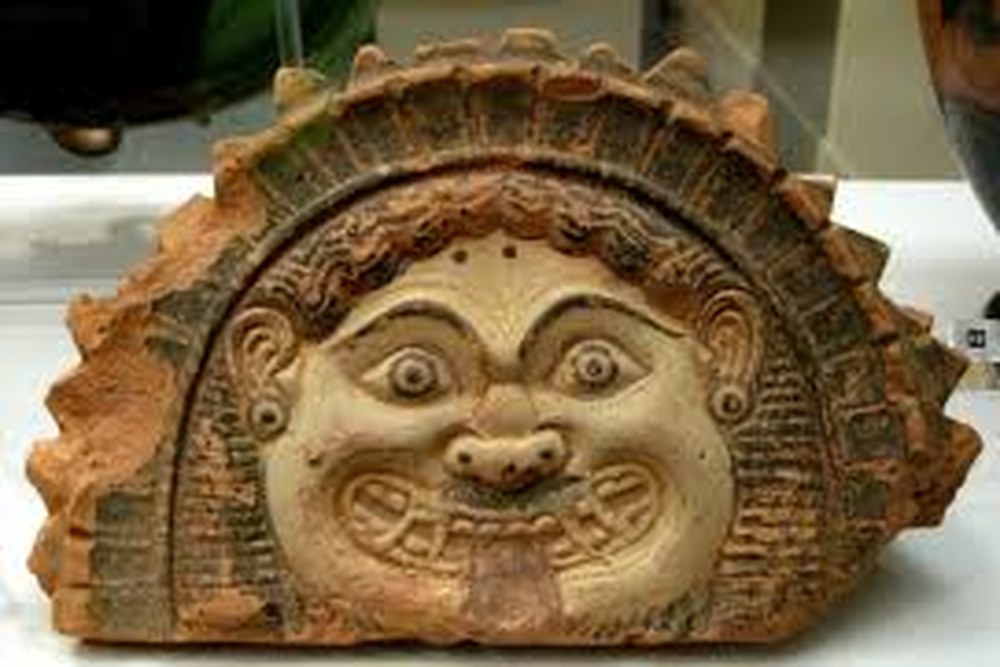
Some of the earliest surviving representations of Medusa appear on architectural elements known as antefixes, decorative tiles positioned along roof edges. In Archaic Greek and Etruscan examples, the Gorgon’s face is deliberately frightening.
The Metropolitan Museum notes that the gorgoneion appeared repeatedly in architecture, ceramics, metalwork, jewelry, and armor. Its protective function was crucial: the terrifying face could symbolically ward off threatening forces.
This is an important starting point for understanding Medusa art in ancient traditions. Her ugliness was not an artistic failure. It was part of the image’s power.
What to notice: frontal eyes, exaggerated mouth, teeth, wild hair, and a mask-like face.
Good image source: The Metropolitan Museum of Art’s Open Access collection contains numerous Medusa objects and explicitly permits reuse of qualifying public-domain images.
2. Perseus Slaying Medusa on an Archaic Greek Jug

A black-figure olpe in the British Museum shows Perseus attacking Medusa while she retains the terrifying features of the traditional Gorgon. Her face turns toward the viewer, her tongue protrudes, and snakes appear around her head.
The object demonstrates how early Perseus and Medusa art was not simply a portrait of the Gorgon. Artists often represented the action of the myth—the pursuit, beheading, escape, and divine assistance surrounding Perseus.
Unlike later idealized versions, this Medusa is unmistakably dangerous. The image reinforces Perseus as a hero overcoming a supernatural threat.
3. Diosphos Painter, Perseus Escaping With Medusa’s Head, c. 500 BCE
A Greek lekythos attributed to the Diosphos Painter shows Perseus fleeing with Medusa’s head while Pegasus emerges from her severed body.
The vase is especially valuable because it captures a narrative moment that later paintings often ignore. Instead of presenting only a detached head, it shows the aftermath of the killing and the miraculous birth connected to Medusa’s death.
For anyone studying Greek mythology and Medusa art, works like this reveal how ancient viewers understood Medusa within a larger mythic sequence rather than as an isolated face.
4. Polygnotos, Perseus Beheading the Sleeping Medusa, c. 450–440 BCE

This painted Greek jar at The Met marks a major visual turning point. Medusa no longer looks monstrous. She appears as a sleeping young woman while Perseus prepares to kill her.
The Met identifies this as one of the earliest examples in which Medusa is represented as a beautiful woman. That change is crucial because it shifts the emotional balance of the scene. The viewer can no longer respond only with fear. Vulnerability enters the image.
Here, beautiful Medusa art begins to complicate the myth. Once the monster becomes recognizably human, the violence of her death becomes harder to ignore.
5. Hellenistic Terracotta Medusa Roundel, 2nd Century BCE

A Hellenistic terracotta roundel in The Met shows just how far the transformation had gone. Medusa appears as a beautiful woman with thick, wavy hair. Small wings above her forehead identify her as a Gorgon.
According to the Metropolitan Museum of Art, Medusa remained a popular decorative motif during the Greek and Roman periods, even after her frightening Archaic appearance had softened.
This is an excellent example of how ancient Medusa art could simultaneously be decorative, protective, mythological, and beautiful.
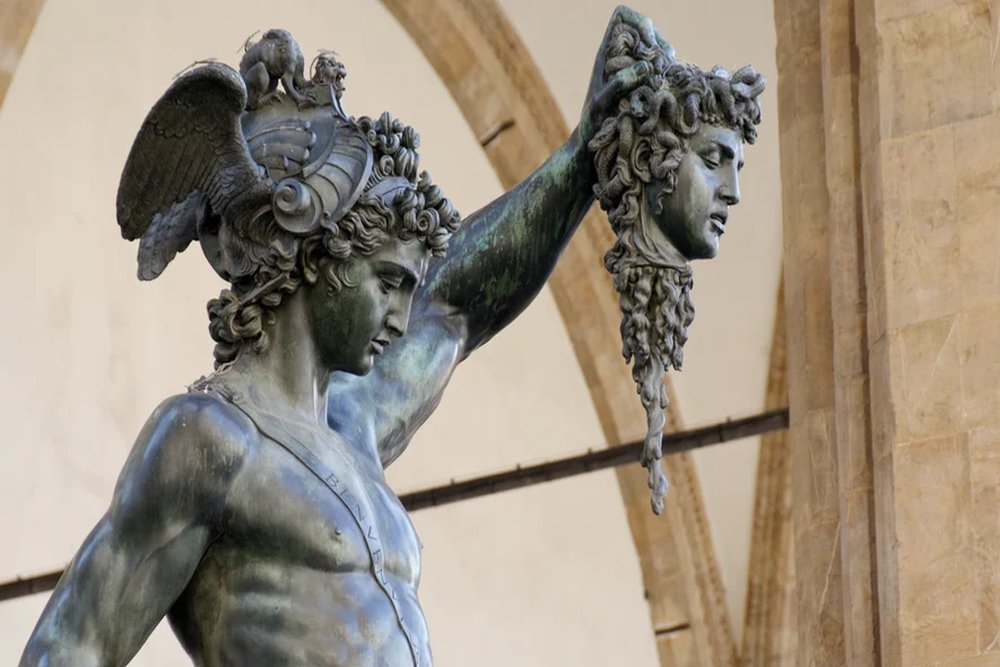
6. Benvenuto Cellini, Perseus With the Head of Medusa, 1545–1554
In Renaissance Florence, the story shifts decisively toward Perseus.
Benvenuto Cellini’s monumental bronze shows the victorious hero standing over Medusa’s body while raising her severed head. Installed in Florence’s Loggia dei Lanzi, the sculpture was commissioned in the Medici political environment and became one of the most famous sculptural interpretations of the myth.
The work is visually theatrical. Perseus is calm and idealized; Medusa is defeated beneath him. Her flowing blood and serpentine hair contrast with his controlled heroic pose.
For centuries, this became one of the dominant ways Western audiences encountered Perseus and Medusa art: male hero above, female monster below.
That hierarchy would eventually be reversed by a contemporary artist.
7. Caravaggio, Medusa, c. 1597

Caravaggio transformed the Gorgon into one of the most startling images of Baroque painting.
Instead of painting Medusa on an ordinary rectangular canvas, he placed her severed head on a convex ceremonial shield. The Uffizi still displays the work as a painted parade shield, making the object itself part of the illusion.
The mouth opens in shock. Blood pours from the neck. Snakes twist violently around the head. Yet the image is strangely beautiful.
Caravaggio’s version sits at the center of what we might now call dark Medusa art: an image where horror, elegance, violence, and technical virtuosity coexist.
The curved shield also creates a clever visual contradiction. Medusa supposedly petrifies anyone who looks at her, yet the viewer is invited to stare directly at her face.
8. Peter Paul Rubens, The Head of Medusa, c. 1617–1618

Rubens made Medusa even more physically disturbing.
Her severed head lies on the ground, eyes still open, surrounded by snakes and small creatures. The Kunsthistorisches Museum notes that the painting could be understood allegorically in Rubens’s time as a triumph of Stoic reason over destructive passions. The animals are associated with the specialist Frans Snyders.
Compared with Caravaggio, Rubens expands the horror beyond Medusa’s expression. The entire environment seems contaminated by her death.
This is not graceful mythology. It is biological, tactile, and uncomfortable.
Among famous examples of dark, beautiful Medusa art, Rubens’s painting remains one of the most unsettling.
9. Antonio Canova, Perseus With the Head of Medusa, 1804–1806
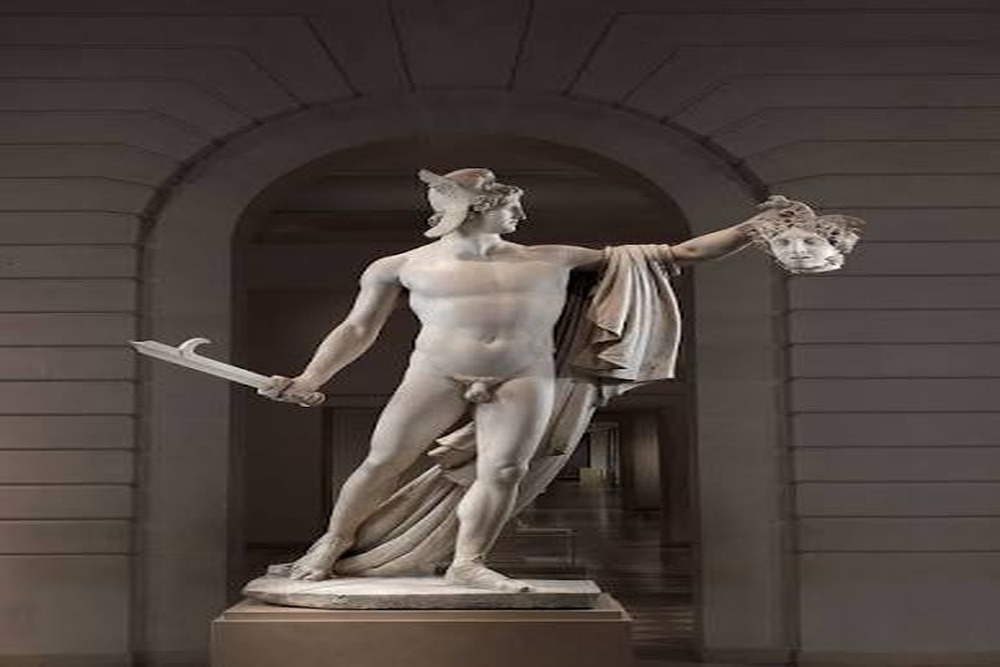
Antonio Canova brought the myth into Neoclassicism.
His marble Perseus is calm, elegant, balanced, and heroic. The Metropolitan Museum describes Canova’s figure as a model of Neoclassical heroic beauty. The sculpture consciously draws on the visual authority of classical antiquity.
Unlike Rubens’s gruesome realism, Canova’s Medusa artwork suppresses horror in favor of ideal form.
The difference is revealing. Medusa’s myth remains the same, yet every artistic period reconstructs it according to its own values.
10. Arnold Böcklin, Medusa, c. 1878
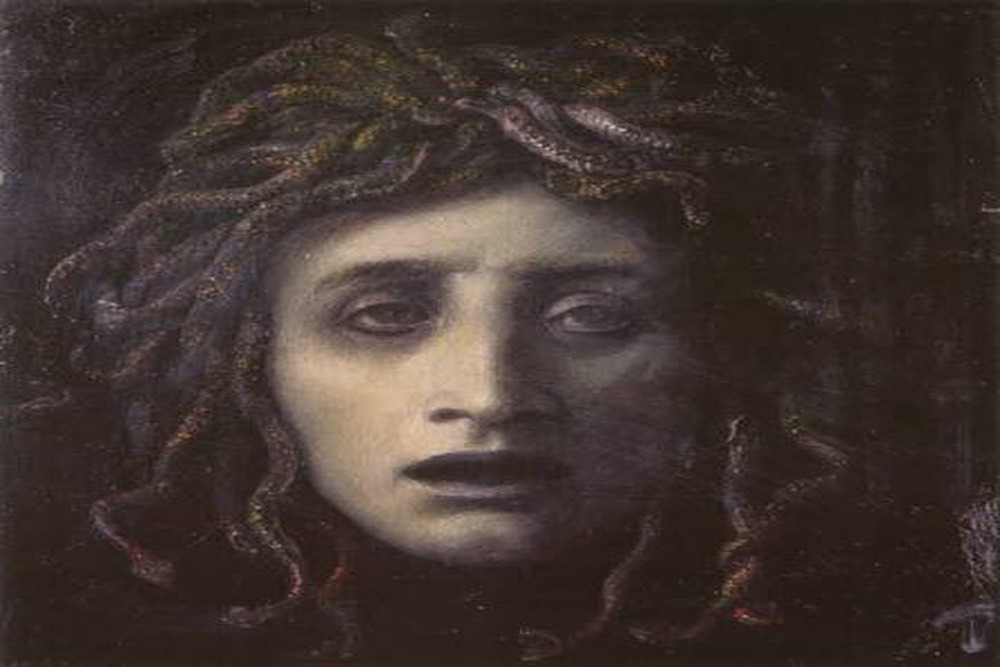
Arnold Böcklin’s Medusa feels radically different from heroic Renaissance and Neoclassical versions.
The face appears isolated against darkness. Instead of screaming violently like Caravaggio’s Medusa, she looks emotionally distant, even exhausted.
By the nineteenth century, artists were increasingly interested in inner states, dreams, fear, death, and psychological ambiguity. Böcklin’s interpretation belongs naturally within that Symbolist atmosphere.
Here, dark Medusa art becomes introspective rather than merely gruesome. The viewer is less likely to ask, “How dangerous is she?” and more likely to ask, “What happened to her?”
11. Neda Al-Hilali, Medusa, 1975
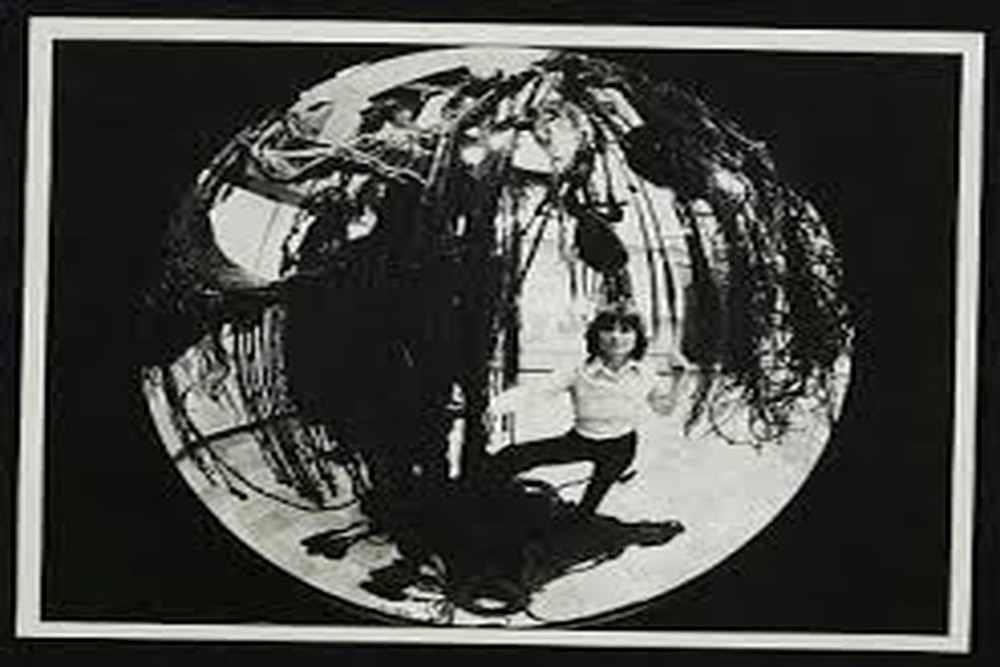
Medusa does not need a face to be recognizable.
Neda Al-Hilali’s 1975 fiber sculpture in the Smithsonian American Art Museum transforms the myth into an abstract, organic structure made of rope, cordage, and string. The museum describes the work as nearly seven feet long, with twisting and dangling forms that evoke something living and tentacular.
This modern interpretation is valuable because it demonstrates how modern Medusa art can escape literal snakes, heads, shields, and swords.
Instead, texture itself becomes Medusan.
It also connects the myth with traditions of women’s fiber work, an area central to Al-Hilali’s artistic practice.
12. Luciano Garbati, Medusa With the Head of Perseus, 2008

Luciano Garbati created one of the most discussed contemporary inversions of the myth.
His sculpture shows Medusa standing upright while holding Perseus’s severed head. It deliberately reverses the composition made famous by Cellini centuries earlier. Garbati’s work was created in 2008, and a bronze version later gained widespread attention when displayed in New York.
The sculpture was not originally conceived specifically as a #MeToo monument, but it was later adopted and interpreted by many viewers through that lens.
That reversal reveals why modern Medusa art is so culturally powerful. Contemporary artists and audiences are no longer required to accept Perseus as the only hero or Medusa as the unquestioned villain.
The myth can be retold from her side.
What Does Medusa Symbolize in Art?
There is no single answer because Medusa’s meaning changes across periods.
Protection
In ancient Greek art, the gorgoneion often functioned as a protective symbol intended to repel harmful forces. It appeared on architecture, armor, vessels, and jewelry.
Fear
Her direct stare, monstrous features, and deadly power made her a natural image of terror.
Beauty and Danger
Beginning in Classical Greece, Medusa became increasingly feminine and beautiful. The Met’s Dangerous Beauty exhibition emphasized the enduring fusion of attraction, danger, violence, and death surrounding her image.
Victory
In Renaissance and Neoclassical Perseus and Medusa art, her severed head frequently becomes proof of Perseus’s triumph.
Trauma
Modern viewers often interpret Medusa through narratives of victimization, transformation, and survival.
Female Power
Contemporary reinterpretations sometimes reverse the traditional power relationship, presenting Medusa as an active figure rather than a defeated monster.
Why Medusa Remains So Popular in Art
Medusa survives because she can support contradictory interpretations at the same time.
She is beautiful and terrifying.
Victim and monster.
Defeated and powerful.
Ancient and modern.
Human and supernatural.
That flexibility has allowed artists to continually reinvent her. An Archaic Greek artisan could use her as protection. Caravaggio could make her a spectacular illusion. Rubens could turn her into an image of horror and moral allegory. Böcklin could make her psychologically haunting. A contemporary sculptor can reverse the entire myth and put Perseus’s head in Medusa’s hand.
Few mythological characters offer artists that much freedom.
How Medusa Art Influences Artists Today
Contemporary creators do not need to copy famous paintings to work with the Medusa theme.
Instead, artists can explore:
- Medusa before her transformation
- The moment she realizes what has happened
- Athena and Medusa confronting one another
- Medusa protecting rather than attacking
- Medusa without Perseus
- Medusa as a modern woman
- Snake symbolism without showing her face
- Abstract Medusa-inspired fiber art
- Black-and-white Medusa portraiture
- Gothic or dark Medusa art
- Surreal Medusa landscapes
- Cyberpunk Medusa
- Classical sculpture combined with digital effects
- Feminist reinterpretations
- Fantasy Medusa art
- Psychological portraits inspired by Böcklin
- Protective gorgoneion designs inspired by antiquity
The strongest new work usually comes from understanding the history first and then changing it deliberately.
Where to Find Medusa Artwork Images Legally
This is one area where your article can outperform many competitors.
The Metropolitan Museum of Art
The Met has hundreds of Medusa-related objects in its database, and qualifying Open Access images can be copied, modified, and distributed, including commercially.
Wikimedia Commons
Many old-master images, including Caravaggio Medusa and Böcklin’s Medusa, have public-domain files available. Always check the individual file’s license and attribution details before publishing.
Museum Collection Pages
Museums such as the Uffizi, Kunsthistorisches Museum, British Museum, Smithsonian American Art Museum, and The Met provide authoritative object information. However, image-reuse rules differ from institution to institution, so check the rights statement attached to each image.
For an art-history blog, a strong caption format is:
Artist, Title, Date, Medium, Museum/Collection, City, Image Source, License.
That immediately makes an article look more authoritative.
FAQs About Medusa Art
What is the most famous Medusa artwork?
Caravaggio’s Medusa, painted on a convex ceremonial shield and now associated with the Uffizi Gallery in Florence, is among the most recognizable Medusa images in Western art.
What did Medusa represent in ancient Greek art?
Medusa frequently functioned as an apotropaic symbol. Her frightening face was used to repel danger and appeared on architecture, pottery, jewelry, and armor.
Why did ancient Medusa art look ugly?
Archaic artists emphasized terrifying features such as large eyes, teeth, open mouths, and sometimes beards. The frightening appearance reinforced her supernatural and protective power.
Why does later Medusa art look beautiful?
From around the fifth century BCE onward, Greek artists increasingly humanized and idealized Medusa. This change corresponded with broader Classical artistic interest in beauty and ideal proportion.
What is the meaning of Perseus and Medusa art?
Traditionally, these works represent Perseus defeating the dangerous Gorgon. However, the meaning can extend to heroism, political authority, reason overcoming chaos, or—especially in modern reinterpretations—questions about violence and who gets to be called the hero.
What is modern Medusa art about?
Modern artists often reinterpret Medusa through themes including identity, trauma, femininity, resistance, protection, anger, and empowerment. Some works deliberately reverse older visual traditions.
Is Medusa art good for tattoos?
Yes. Medusa’s symmetrical face, snakes, gaze, and mythological associations make her visually suited to tattoo design. However, meanings vary widely from person to person.
Where can I find public-domain Medusa art?
The Metropolitan Museum of Art’s Open Access collection is an excellent source, while Wikimedia Commons also hosts many public-domain reproductions. Always verify the license for the exact image before publishing or selling it.
What is a gorgoneion?
A gorgoneion is the head or face of a Gorgon, usually Medusa, used as a visual motif. It was especially common in ancient architecture, pottery, metalwork, jewelry, and armor.
Why is Medusa still popular in art?
Her image combines opposites—beauty and horror, vulnerability and power, death and protection. Because those tensions can be reinterpreted endlessly, Medusa remains relevant to artists working in both traditional and contemporary media.